Medical dermatology
Medical dermatology · Recurring concerns · Diagnostic coordination · Continuing review
Meet the pathway lead ↓Specialist hospital-level dermatology
Team-led assessment, diagnostic thinking, procedure safety and continuing review are organized as connected layers of care.

01 · From common to complex
Begin with the concern as the person experiences it.
General demonstration content · Not diagnostic adviceConnect history, examination and specialist judgment.
General demonstration content · Not diagnostic adviceUse targeted diagnostics only where indicated.
General demonstration content · Not diagnostic adviceKeep procedure suitability and safety inside the pathway.
General demonstration content · Not diagnostic adviceBring paediatric and allergy-focused context into coordinated review.
General demonstration content · Not diagnostic advice02 · Three connected pathways
Medical dermatology · Recurring concerns · Diagnostic coordination · Continuing review
Meet the pathway lead ↓Procedure suitability · Safety planning · Clinician-led technology · Follow-up
Meet the pathway lead ↓Paediatric dermatology · Allergy-focused review · Family guidance · Team referral
Meet the pathway lead ↓03 · The specialist team
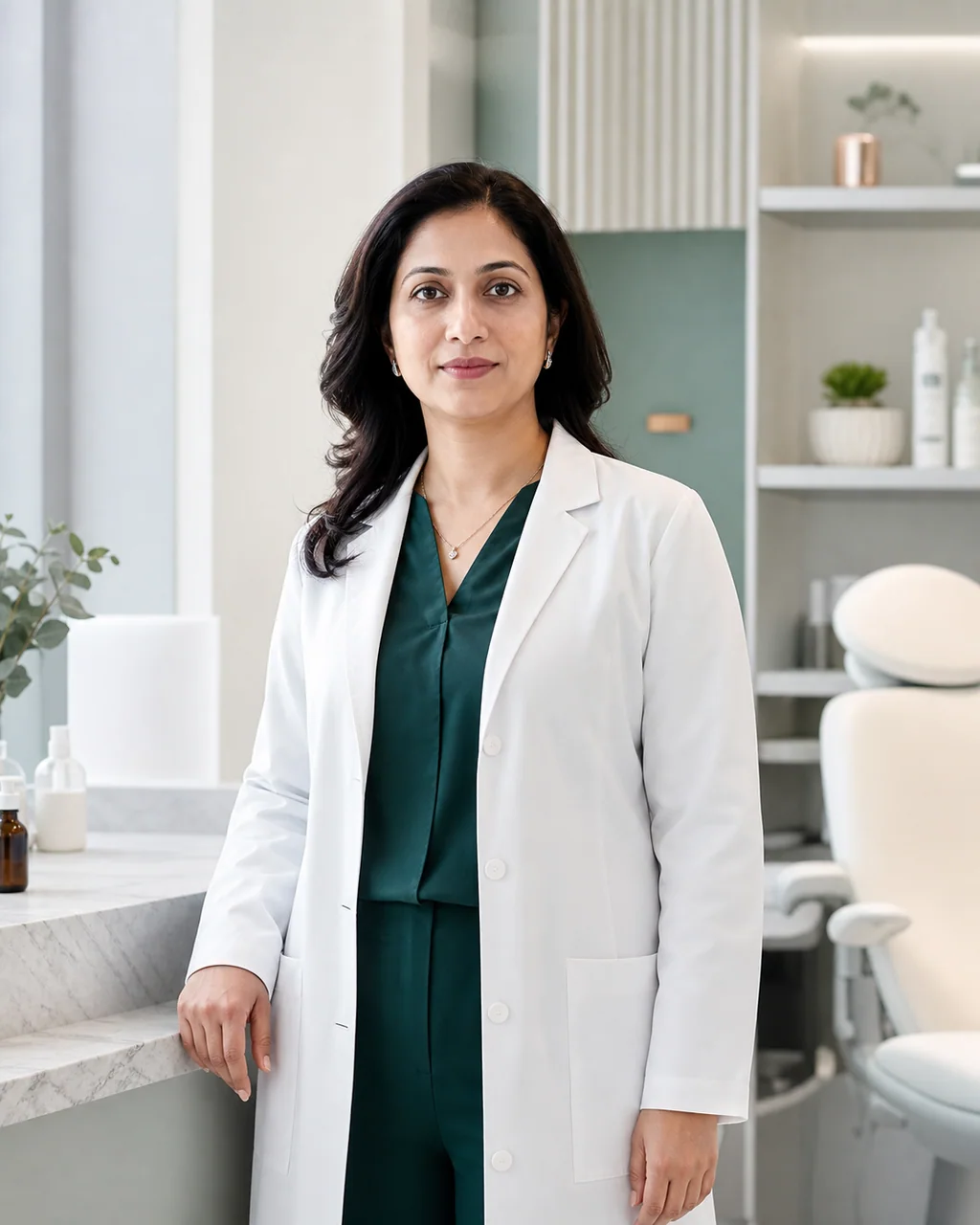 Layer 02
Medical Dermatology
Dr. Shalini Narang’s fictional profile demonstrates the medical-dermatology layer of a specialist hospital. She is presented as coordinating history, examination, diagnostic reasoning and continuing review for concerns that may be recurring or complex. The language remains calm and general: it does not label a visitor’s condition, promise resolution or imply that every case requires hospital-level tests or procedures.
Complexity becomes more manageable when assessment and continuity stay connected.
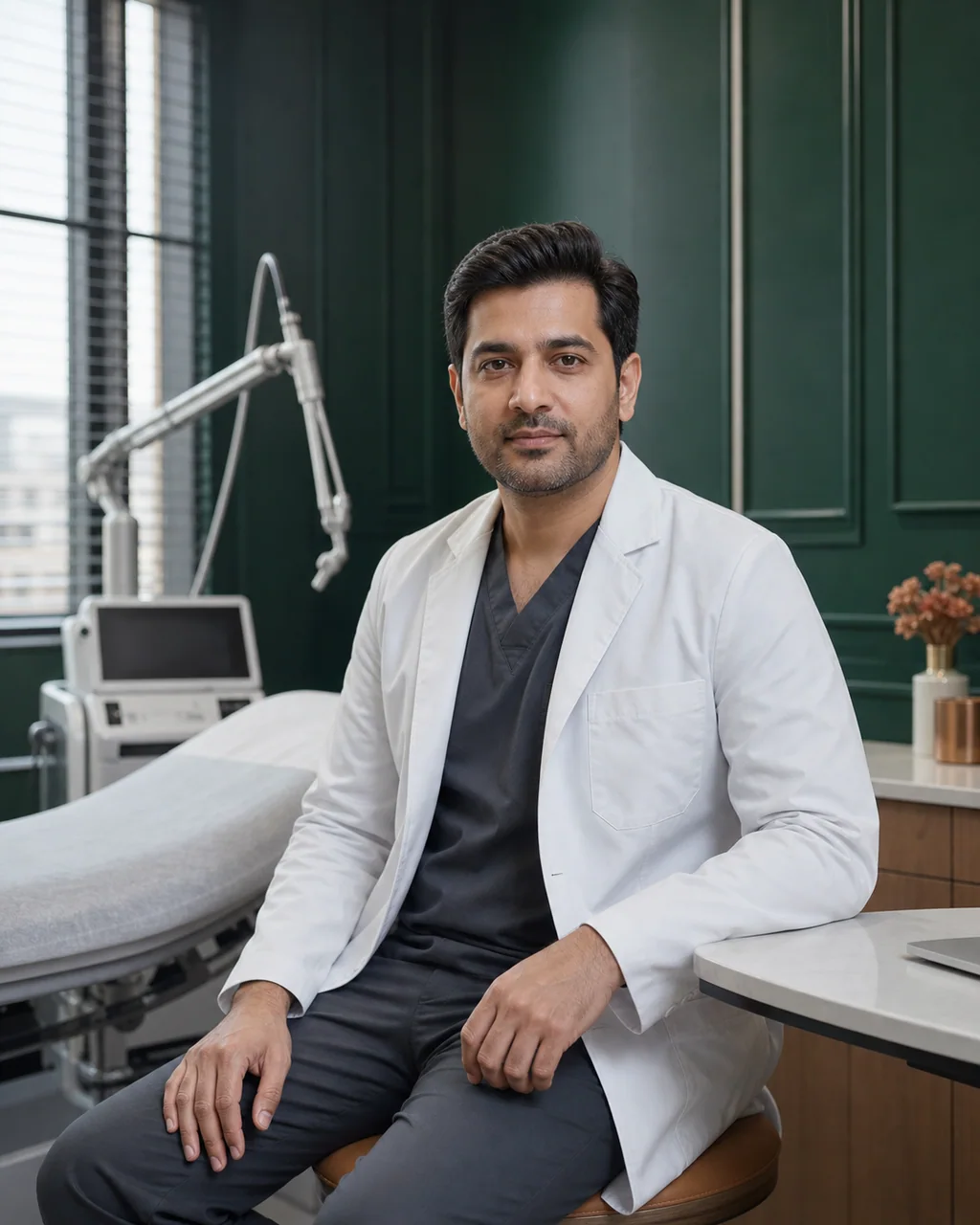 Layer 03
Procedural Dermatology
In this fictional hospital profile, Dr. Aditya Kaul explains procedural dermatology through indication, suitability, preparation, technique and follow-up. His role is integrated into the wider team rather than presented as a technology showcase. The copy makes clear that devices and procedures require clinician-led assessment and that response, recovery and review vary; no procedure result or safety outcome is guaranteed.
A procedure belongs inside a care pathway, never outside clinical context.
 Layer 04
Paediatric and Allergy-focused Dermatology
Dr. Neha Prasad is a fictional specialist profile showing how child, family and allergy-focused dermatology could connect with a broader hospital team. She emphasizes age-aware explanations, caregiver questions, relevant history and careful referral or testing decisions where clinically appropriate. The profile does not provide allergy diagnosis, urgent advice or treatment instructions and makes no claim about a specific paediatric facility.
Age, family context and clinical history all shape a useful dermatology conversation.
04 · Diagnostic and procedural context
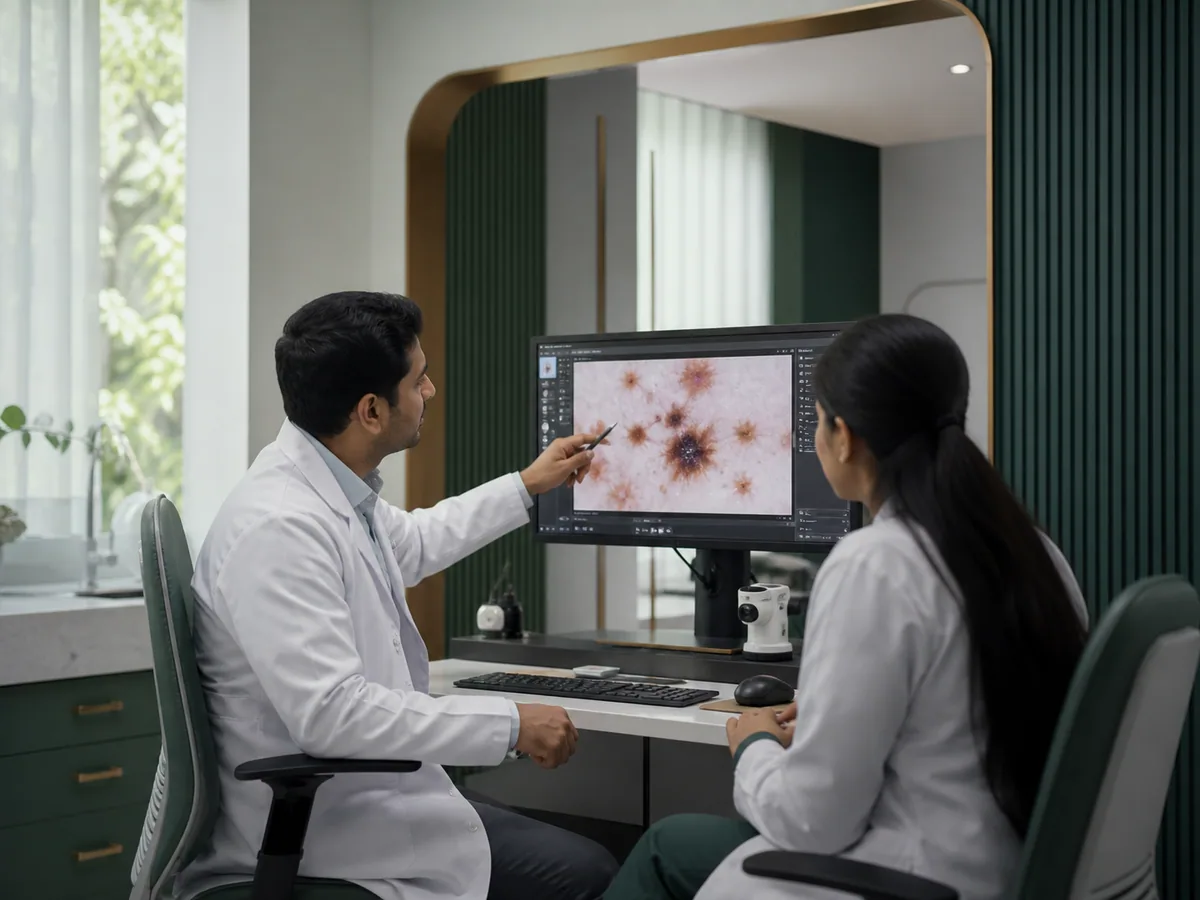
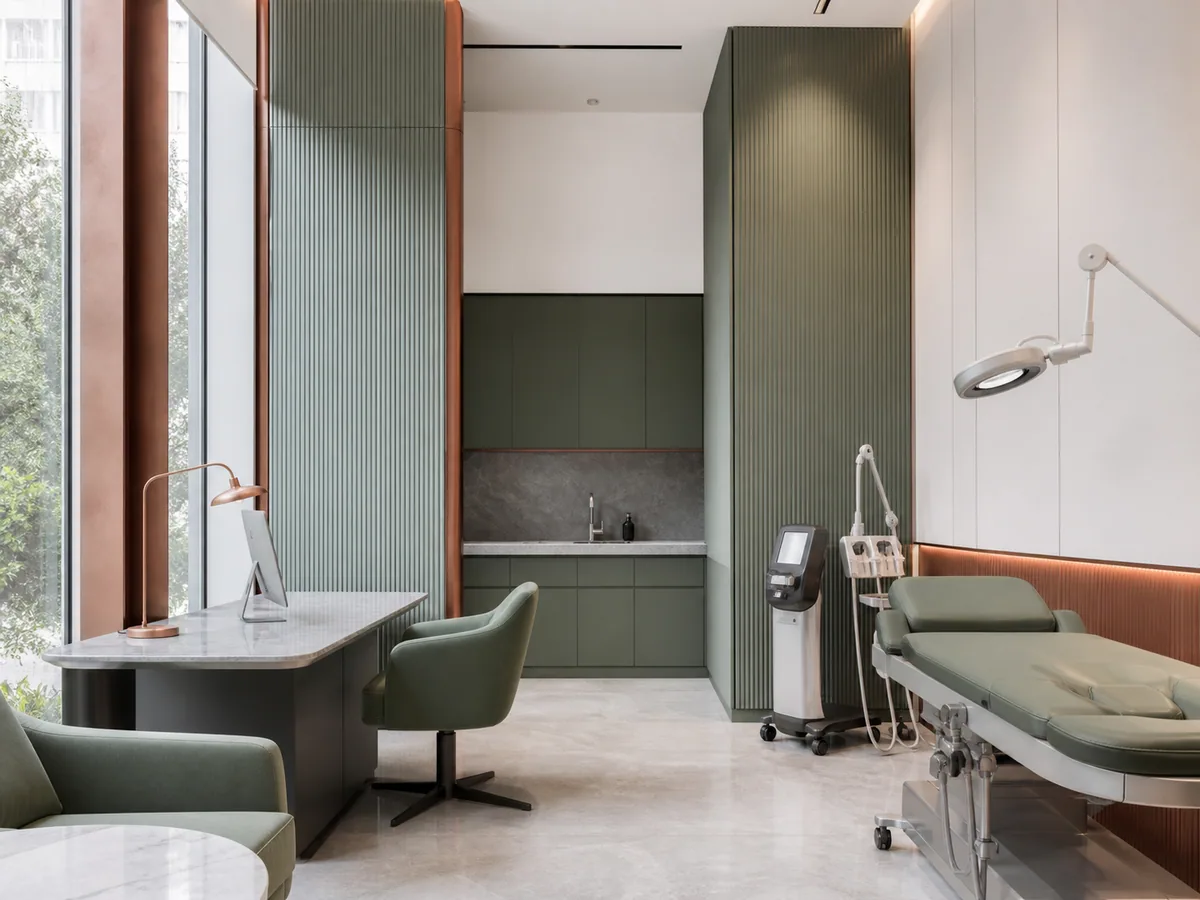
Specialist spaces are presented with purpose, clinician oversight, preparation and review—not as proof that a visitor needs a test or procedure.
05 · Continuing care
06 · Condition index
07 · Sample specialist schedule
08 · Referral and follow-up FAQ
09 · A deeper digital system