Restorative architecture
Restorative planning
Discuss the website treatment →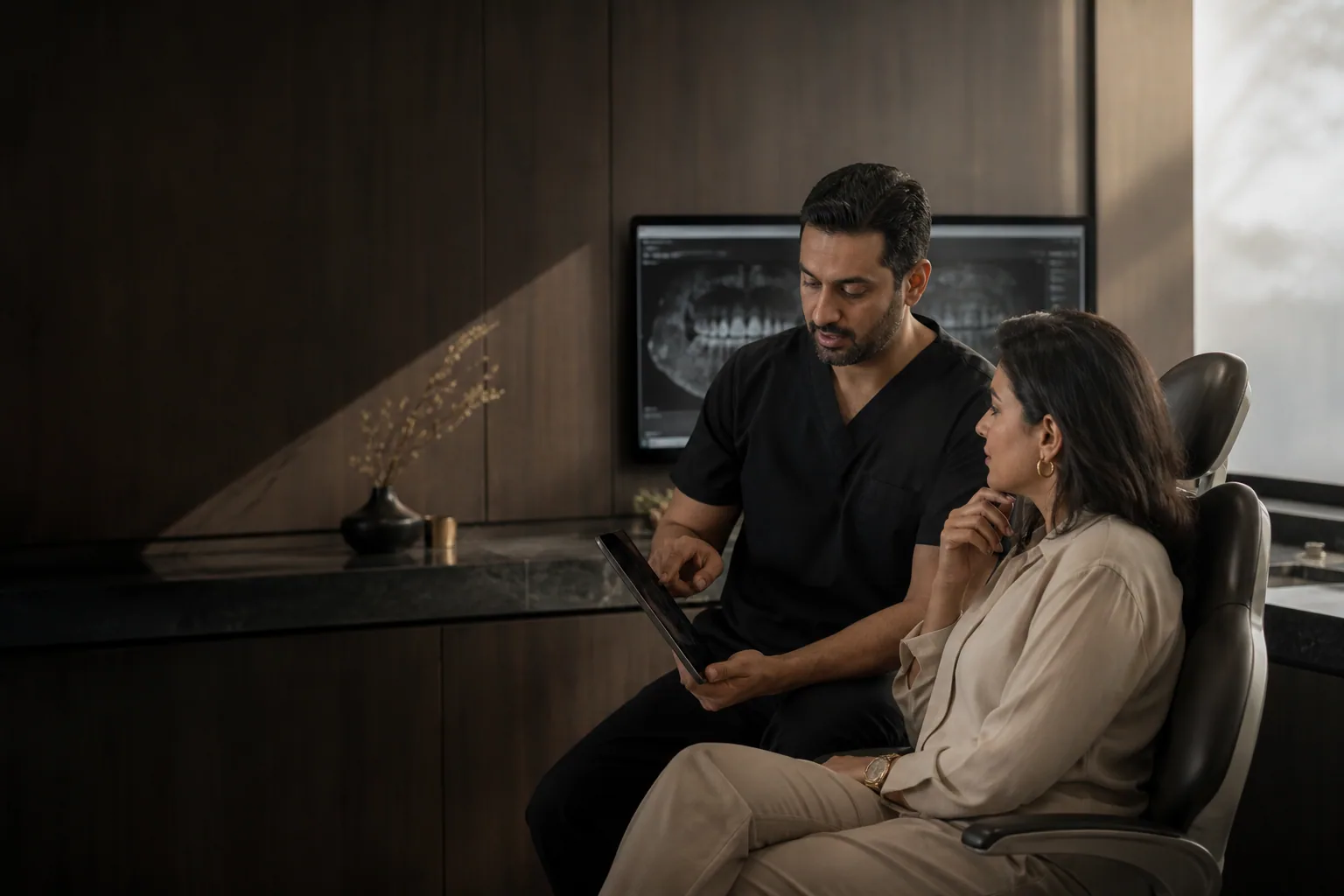
Cosmetic · Restorative · Implant · Alignment
A private, staged approach to restorative, implant and alignment decisions—without promises of a perfect result.
Our fictional design philosophy
01—04
Each stage is visible before clinical treatment begins.
Listen to goals. Record clinical findings. Discuss limits and alternatives.
Use records and technology to support—not dictate—a proposed direction.
Proceed only after a real clinician confirms indication, suitability and consent.
Check function, adaptation and maintenance through planned follow-up.
Four curated disciplines
Restorative planning
Discuss the website treatment →Implant consultations
Discuss the website treatment →Smile alignment
Discuss the website treatment →Complex rehabilitation discussions
Discuss the website treatment →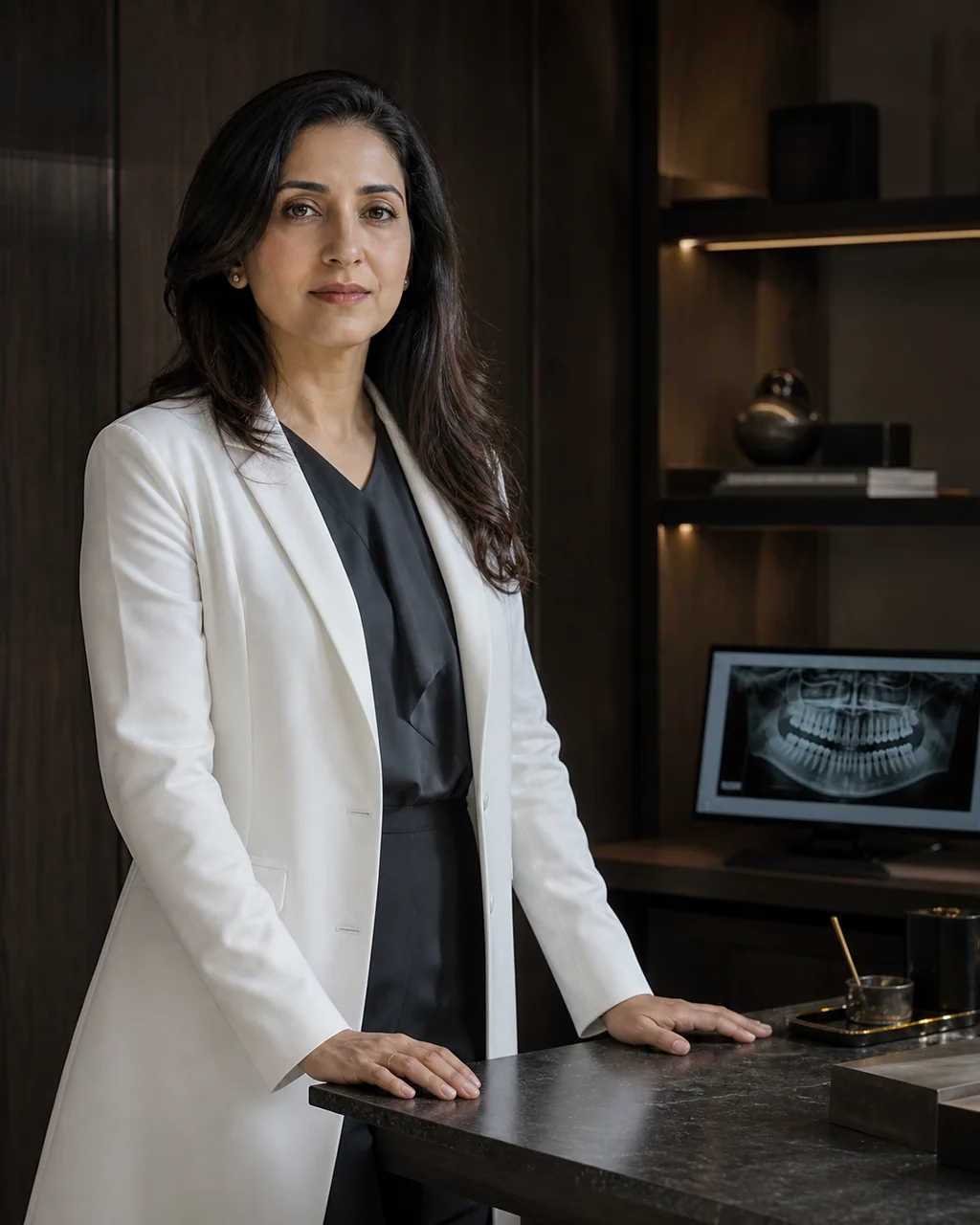
Restorative planning
Dr. Naina Oberoi’s fictional profile is built around careful restorative planning. It shows how function, existing tooth structure, comfort, appearance and long-term maintenance can be discussed together before a patient chooses a direction. Her presentation is intentionally measured: technology supports records and precision, while clinical judgment and informed consent remain central. No outcome, lifespan or aesthetic result is promised by this demonstration.
Precision begins with understanding what the restoration needs to do, not only how it should look.
Alignment planning
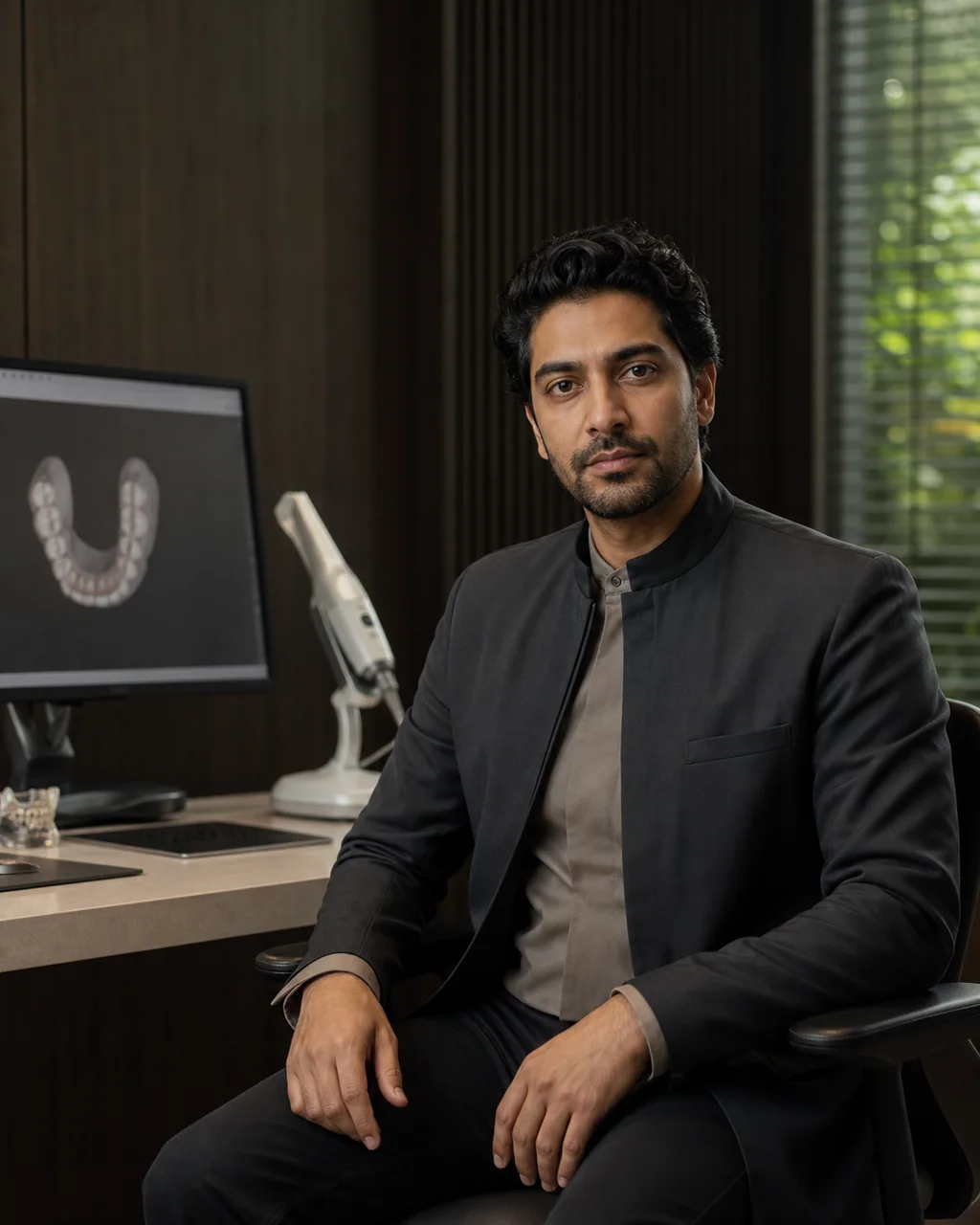
This fictional profile presents Dr. Vihaan Arora as an alignment consultant who explains choices through records, staged planning and realistic review points. The emphasis is on oral function, individual anatomy and informed preferences rather than on a universal ideal smile. His role in the design also demonstrates how timelines, appliance options and responsibilities could be discussed without manufacturing before-and-after results or guaranteeing an exact finish.
Alignment is a clinical plan shaped around the person, not a standardised image.
Abstract planning preview · Not patient results
Line studies can help explain proportion, contact and alignment conversations. These diagrams are illustrative and predict no clinical or aesthetic outcome.
The technology atelier
Clinical equipment supports records, planning and delivery. It is not used as a decorative promise.
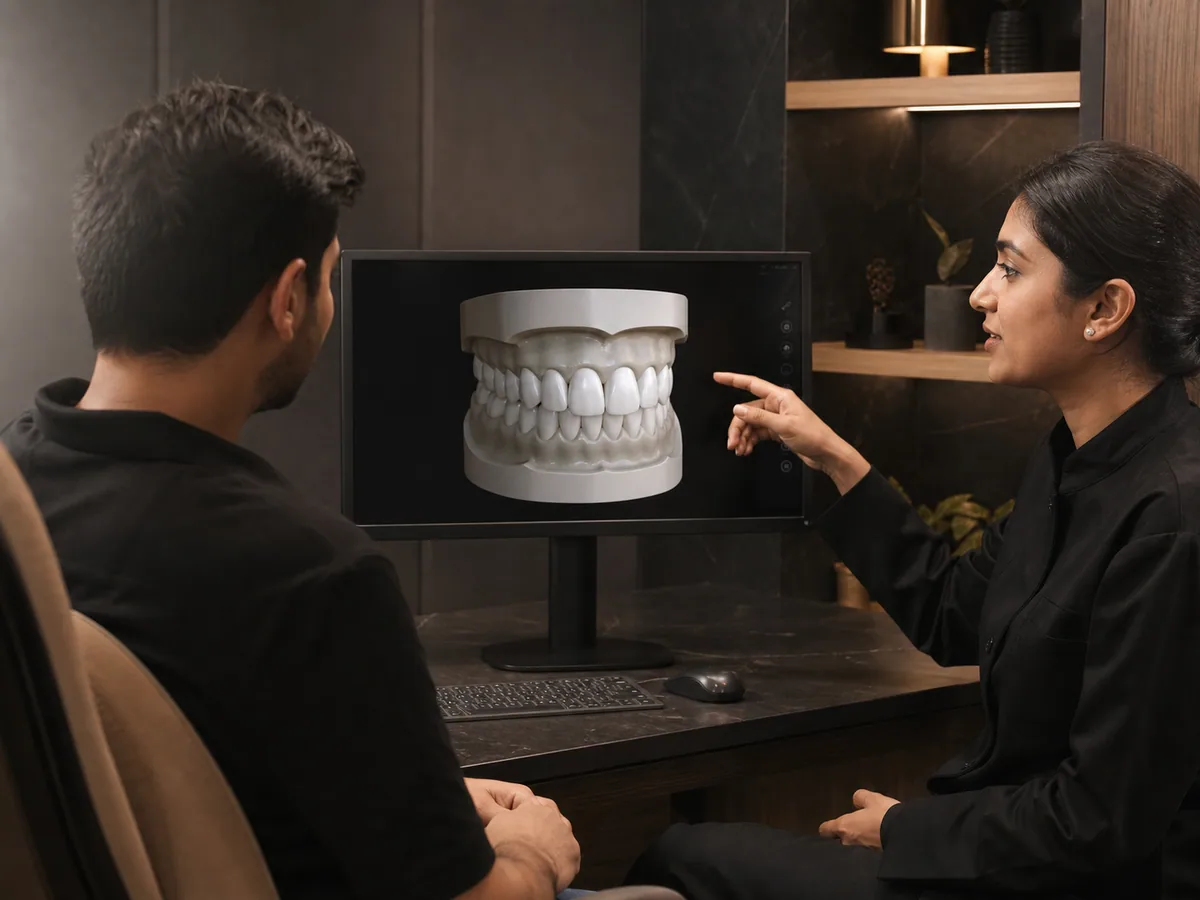
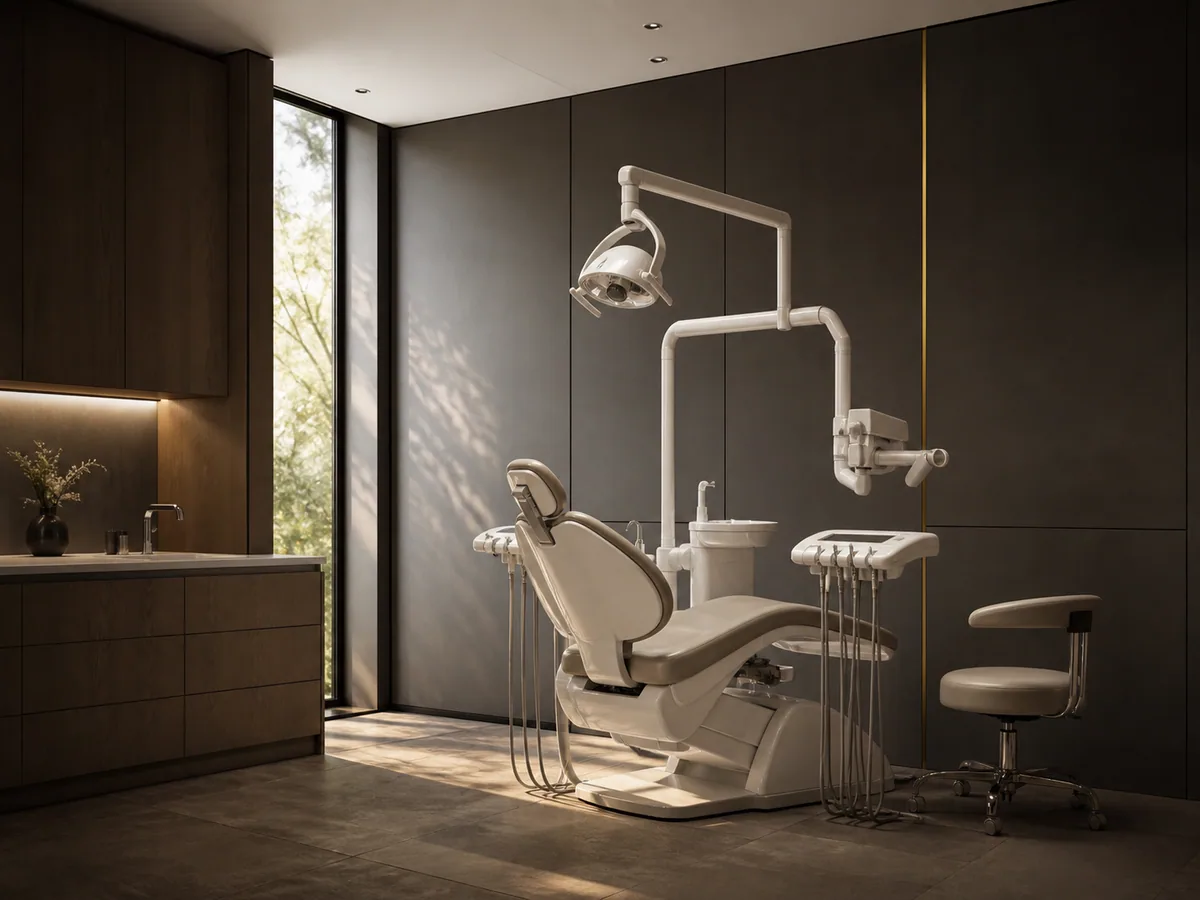
A real implementation should publish verified consent, data and privacy information. This demonstration makes no legal guarantee.
Questions worth asking
A quieter expression of precision